Turn documents into decisions: why contract text is the baseline
Risk, responsibility, quality and cost in construction are decided in contractual documents. Why text is the baseline for project decisions.
Key takeaways
Contractual documents serve as the foundational baseline for governing project risk, quality, and cost throughout the entire construction lifecycle.
Fragmented, unstructured information like emails and PDFs often forces teams to rely on memory or manual reviews during critical project moments.
Centralizing contractual documents into a navigable baseline helps teams anchor project decisions to actual agreements while reducing costly downstream errors and oversights.
Construction talks a lot about models, schedules, dashboards, and “new ways of working”. Those tools matter. But when projects get tested. In delivery, in disputes, in audits. People reach for the same source every time.
Contracts and special conditions.
Technical specifications and standards.
Tender documents, clarifications, and addenda.
Variation orders, change requests, minutes, correspondence.
That body of material is what we at Volve call contractual information. It lives in documents, and it is the baseline for how a project is actually governed. Because this is where risk, responsibility, quality, scope, and cost are defined. Not only at signing, but through the full project lifecycle.
The real “single source of truth” is textual
Most organisations say they want a single source of truth. In projects, it already exists. It just doesn’t behave like a clean database.
In practice, the ground truth is the chain:
The tender and offer documents that define scope, options, and assumptions
The signed contract and appendices
The specifications and standards that govern the work
The change trail that modifies the agreement over time
Models, schedules, reports and dashboards sit on top of what is written. When things get tense, the questions are usually simple:
What does it say in the contract.
What did we actually offer in the tender.
Which version of the spec applies here.
Those answers live in text.
A common failure mode is not that information is missing. It’s that it exists in the wrong place, or in the wrong version. A clarification overrides an earlier requirement, but the team keeps working from the old wording. A deviation is approved in a meeting, but never captured in the governing set. A variation is agreed, but the downstream scope and flow-down obligations don’t follow. The project isn’t lacking documents. It’s lacking a usable baseline.
Tendering is where the contractual story starts
Every project has its own contractual story. Tendering is the start, but not the whole story.
In tendering, the picture gets formed:
The client defines requirements in an RFP or tender package
You respond with scope, method, assumptions, and risk position
Clarifications and addenda refine the picture on both sides
At award, that bundle becomes the seed of the governing set. From there, more text accumulates. Negotiated amendments. Technical appendices. Instructions. Variations. Claims. Minutes. Correspondence.
Tendering is where the story begins. Execution is where you live with it.
How contractual information feeds the rest of the project
If you look at how projects actually run, contractual information is what other processes read from.
In tendering, your understanding of requirements drives:
Risk allocation and risk pricing
Planning and scheduling assumptions
Allowances and contingencies
Subcontractor scopes and interfaces
How you frame quality, HSE, and ESG commitments
If the requirement picture is incomplete or wrong, all of these become misaligned. You can build a clean estimate on top of the wrong obligations.
In execution, the same contractual picture becomes the baseline for:
Detailed design obligations in design and build
Construction constraints that shape sequencing and access
Change assessment and variation pricing
QA and compliance checks
Flow-down obligations to subcontractors and suppliers
There’s also a second dimension that matters just as much. What the documents do not say. Gaps, grey zones, missing assumptions. Those often drive the biggest surprises, because nobody notices them until the project is already moving.
The problem isn’t importance. It’s usability
Contractual information is powerful, but hard to work with because it is usually:
Unstructured. PDFs, Word files, spreadsheets, scanned docs, emails
Distributed. Portals, file shares, mailboxes, document systems, claim tools
Evolving. Versions, addenda, clarifications, and changes over time
So even basic questions become slow and risky:
Where did we accept this risk.
Which requirement did we actually price.
What is the latest agreed scope in this area.
What changed between tender, contract, and variations.
Without a way to connect the full set, teams fall back on memory, local spreadsheets, and manual review. That works until it doesn’t.
Volve: structured insight, traceable back to source
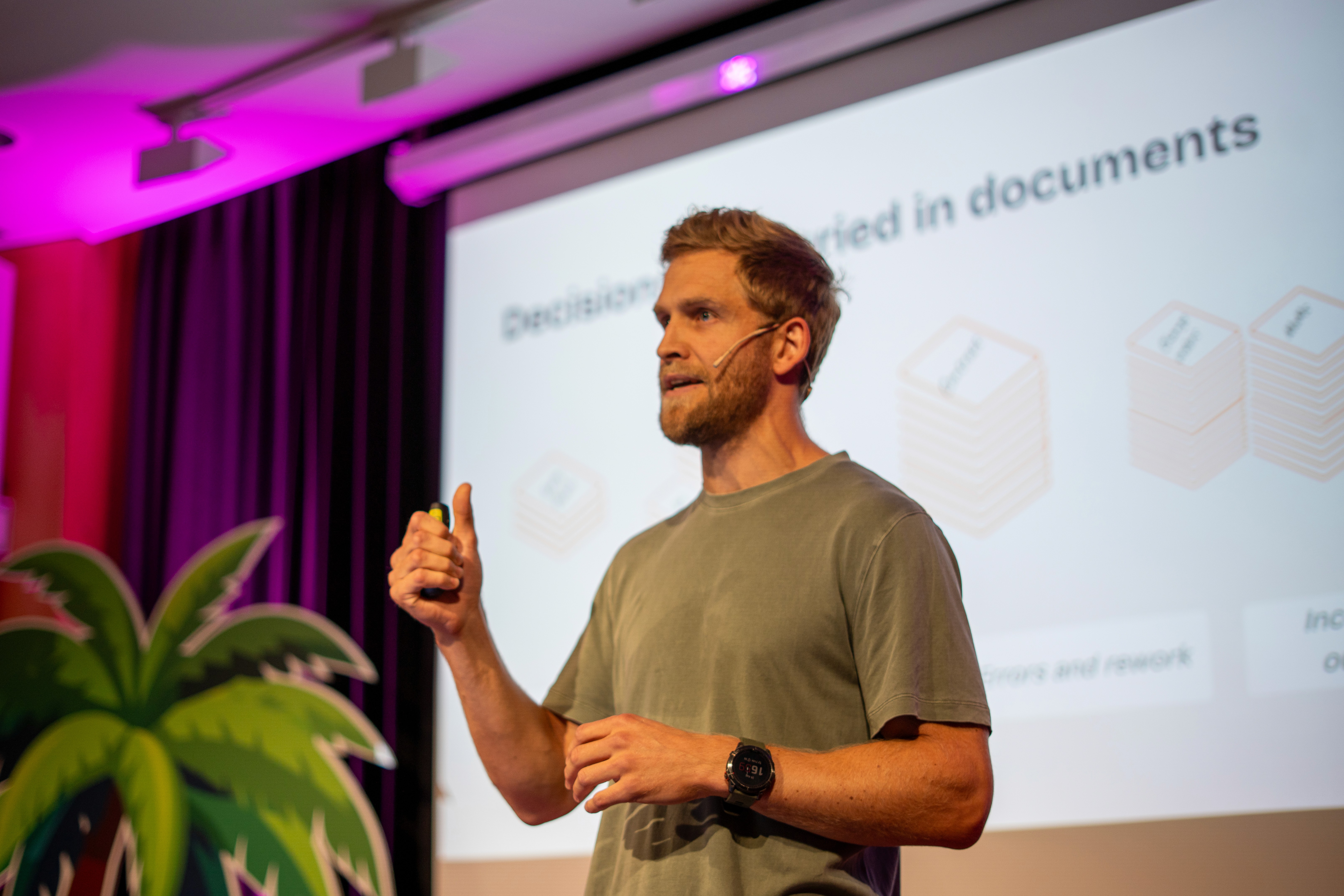
At Volve, we start from a simple premise. Project decisions live in documents.
So the platform turns unstructured contractual documents into structured insight, while keeping traceable links back to the original text. Governance matters, so the user chooses which documents are part of the governing set for the question they are asking.
From there, Volve helps teams do practical things:
See all clauses and requirements related to a topic in one view. For example access constraints, working hours, ground risk, or testing requirements.
Follow the chain on the same issue from tender to contract to changes, so it’s clear what was updated, when, and where.
Answer “where does this obligation come from” with confidence, and click back to the exact clause, annex, or clarification.
The goal is straightforward. Turn contractual documents into a navigable baseline, so teams work from what is actually agreed, not what they think was agreed.
Why this matters
When you treat contractual text as the baseline system of record, a few things happen:
Fewer surprises, because obligations and changes are easier to see early
Fewer downstream mistakes, because execution starts from what is written
Better decisions, because options and risks stay anchored to source
Stronger positions in negotiations, claims, and audits, because you can prove what was agreed, when, and where
Modern project tools will keep improving. But in construction, the decisive layer is still text. That’s why Volve is built around contractual documents. Starting with tendering, and extending through contract, execution, and close-out.
Tendering in construction will always be complex. But it does not have to be hard to see or hard to understand.
Read more about why in construction, searching is expensive, but missing information is worse here.
See how Volve turns document complexity into decisions
Explore how construction teams surface risk, trace requirements, and carry a clearer baseline into delivery.