Tender development from first draft to submission
Bid development for construction in Volve: Grounded drafts of execution plans and method statements, quality assessment against award criteria, and CV analysis before submission.

Alf Jørgen Dovland
COO & Co-Founder

Tender work is short on time, spread across several disciplines, and often ends in a rush. Requirements sit scattered across hundreds or thousands of pages, contributors work in parallel, and there's rarely enough time to double-check everything before submission. Miss a requirement and you risk disqualification. Take on scope without pricing it properly and you've sold the margin before the project has even begun.
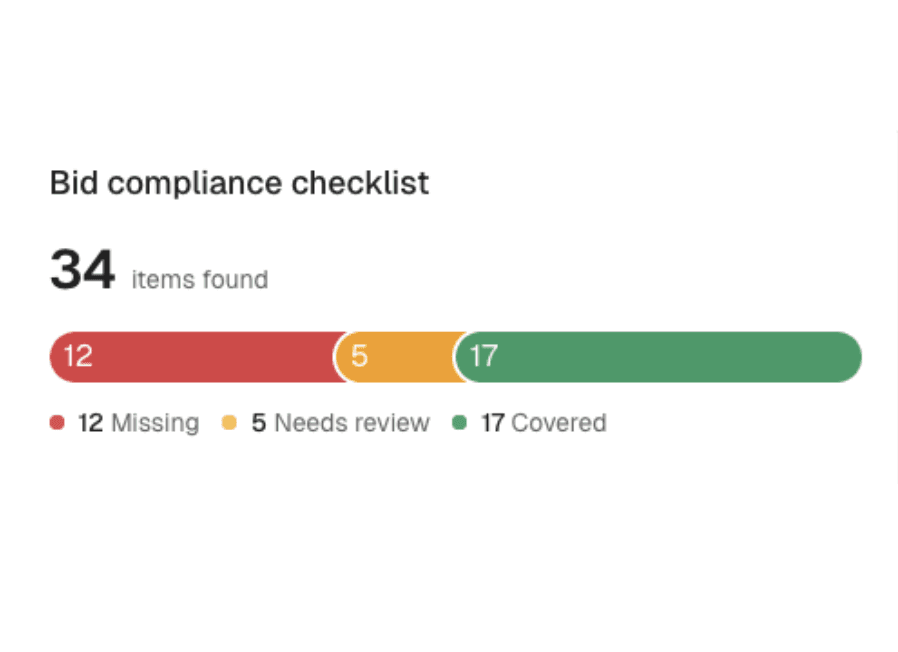
Too many of the hours you do have go to cross-checking that every criterion and requirement is covered. Volve's job is exactly that systematic part: tracking requirements, keeping the bid anchored to the tender documents, flagging what needs attention, and proposing where you can add value. It doesn't price the job, and it doesn't replace your specialists. It moves their hours to where expertise creates value: the technical conflict between two requirements that read consistently but can't be built together, the methodology, how the work is actually sequenced and optimised for this specific project, and the pricing and judgement on top.
In the platform, this work sits under Bid development. The compliance side, tracking every requirement from the day the tender lands, has its own article. This one covers the rest: drafting the bid, and sharpening it before submission.
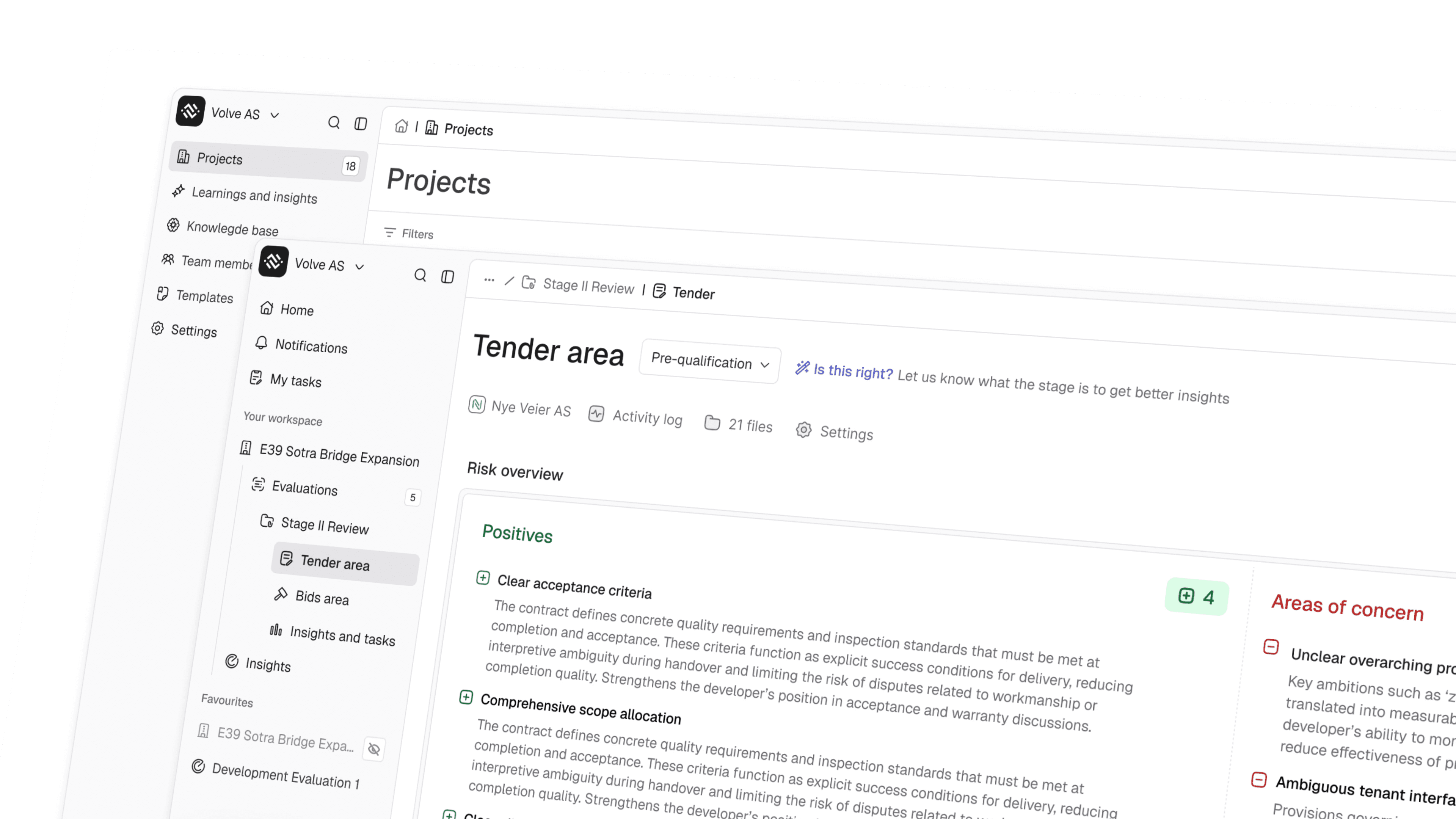
Draft execution plans and method statements. A first draft grounded in this project, built from the award criteria in the tender at hand. The first version aligned that draft to the RFP and to learnings from public tenders. New since then: the draft also draws on relevant text from your own previous bids and your logged tender feedback, alongside Volve's best-practice patterns built from public construction tender data. A starting point made for this client and this project, not a generic template, in an interactive workspace where your team refines and builds on it.
Quality assessment of the subjectively scored deliverables.
Execution plans and method statements, sharpened before delivery. Checks your execution description against the award criteria and returns suggestions for improvement. What shipped in 2025 as a rating with improvement points is now a working loop: accept, reject, or add context, then re-run as the bid develops. Plus a final review before submission that flags where an evaluator might deduct points, grounded in the same public tender data.
CV analysis. Checks each CV against what a specific role requires on this project, and shows where to sharpen the presentation before submission.
Coming soon: reference projects. The same treatment, next on the list.
None of this writes the winning bid on its own. But it gives you a serious starting point in tenders that aren't awarded on price alone. And it makes sure the systematic work is done early and stays done, so the final days before deadline go to pricing, risk and judgement rather than searching for gaps.
Want to see this against a live tender? Book a demo.
Alf Jørgen Dovland
COO & Co-Founder
Share
See how Volve turns document complexity into decisions
Explore how construction teams surface risk, trace requirements, and carry a clearer baseline into delivery.