The tender isn't in the documents
Costly tender mistakes live between documents, not inside them. How reading construction tenders as connected requirements reduces bid risk.

Key takeaways
Costly tender mistakes live between documents, not inside them. How reading construction tenders as connected requirements reduces bid risk.
Focus: The expensive mistakes live in the seams
The complexity of construction is not going away.
A construction tender easily runs to forty documents. Often many more. A bill of quantities in the client’s structure. Specifications written per engineering discipline. Contract terms, drawings, geotechnical reports, and then the addenda that revise all of it three weeks before deadline.
Each document describes the same project from its own angle. None of them describes the project. Tender documents don’t add up to a tender.
The expensive mistakes live in the seams
Ask an experienced estimator where money was lost on a bad project. The answer is rarely “we misread a document”. It is almost always a relationship between pieces of information that nobody held together at the right moment.
A fire requirement written by the fire consultant lands in the steel package, which nobody priced, because steel estimators do not read fire documentation. A fixed-quantity line sits buried in an otherwise adjustable bill of quantities, quietly shifting quantity risk to the contractor on that one item. An addendum changes scope in a chapter everyone had already reviewed and signed off.
None of these is a hard document to read. Each is a connection between requirements that nobody was reading for. This is where commercial risk in a tender actually lives, in the seams, not in the text.
The questions that decide a bid are cross-cutting
The questions that actually determine a bid are never about one passage. What does this tender contain, and where? Who executes each part? What constrains it? What changed since the last revision? Which obligations has nobody placed anywhere?
Take a simple one: which requirements reach the drywall package? The answer is spread across a specification chapter, an acoustic report, a contract clause, and a section of the bill of quantities, none of which reference each other. A person answers by cross-reading and remembering. That works on simple tenders with long deadlines. It fails on complex ones with short deadlines, which is most of them.
The obligations nobody placed anywhere are the sharpest case. A requirement that cannot be tied to any package, location, or line item is unpriced scope. It does not show up as a mistake during the bid. It shows up during execution, as a change order or a loss.
Holding the structure, not reading more text
The natural response is to treat this as a reading problem and solve it by reading faster. It is not a reading problem. Every document in the set could be read perfectly and the expensive relationships would still be invisible, because they exist between the pieces, not within them.
What matters is holding the structure. A tender is not a stack of files. It is a set of relationships across six dimensions:
What is required: the obligations, requirements, penalties, and guarantees
Who executes it: the disciplines and packages the work divides into
How it is classified: the process and coding systems that structure the work
What it is: the physical objects being built
Where it sits: the locations each part belongs to
What changed: the revisions and the contractual precedence between them
Where the tender provides a bill of quantities, every line sits at an intersection of all six. Where it doesn’t, as in many design-build tenders, the same dimensions still apply. They are just spread through functional specifications and contract terms instead of coded lines.
When these relationships are made explicit rather than left to memory, the questions that used to take days become direct lookups. Which requirements reach this package, including the ones authored by disciplines that do not normally feed it. What changed between revisions, line by line. Which obligations cannot be placed anywhere.
Why this compounds
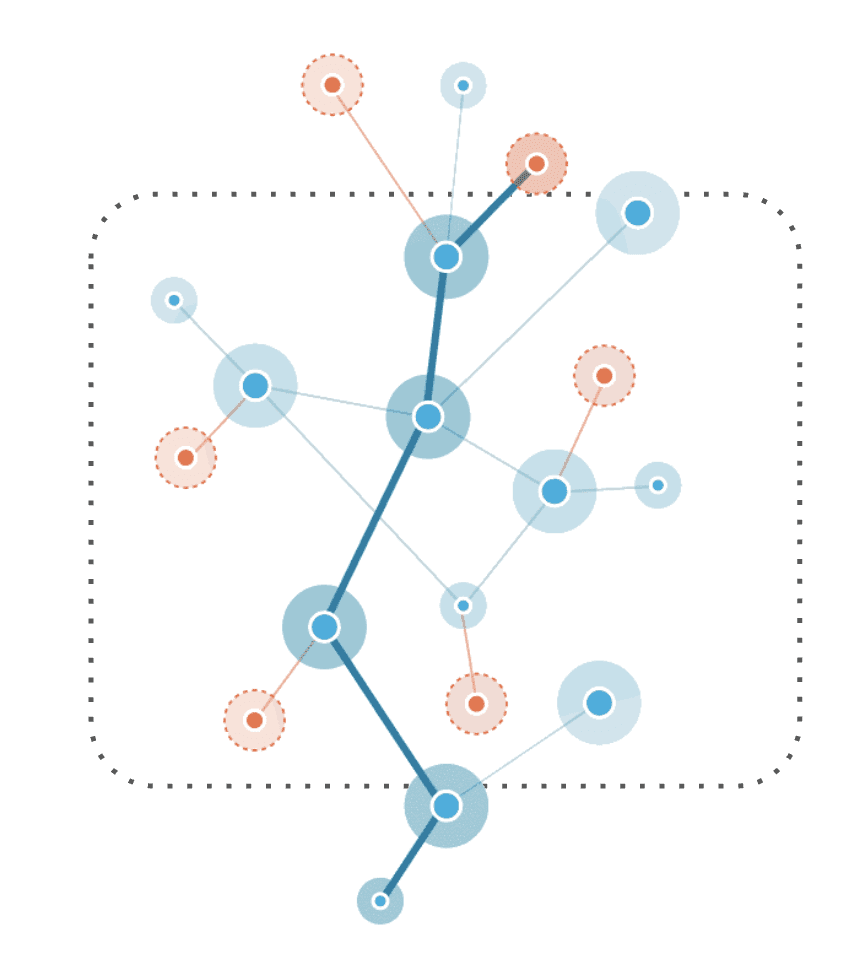
Volve is building a construction commercial graph: a knowledge graph built for how tender content relates. Not a database of documents, but an accumulating model of the relationships across documents, disciplines, processes, objects, locations, and obligations, specific to construction and improving with every tender it processes.
Every tender processed strengthens the shared structure, but not the data each one contains. Process and coding systems get mapped across markets, so a concrete package means the same thing in a Norwegian and a Finnish tender. Domain experts correct the model where it is wrong, and the corrections persist. Outcomes link back to the structures that produced them.
The complexity of construction is not going away. Projects get larger, supply chains longer, deadlines shorter. But it was never a reading problem. Understanding a tender means holding its relationships, across every document, requirement and obligation at once. That is a structural choice, and it is made before any AI runs.
Read more about how construction teams can get smarter with every project here.
See how Volve turns document complexity into decisions
Explore how construction teams surface risk, trace requirements, and carry a clearer baseline into delivery.